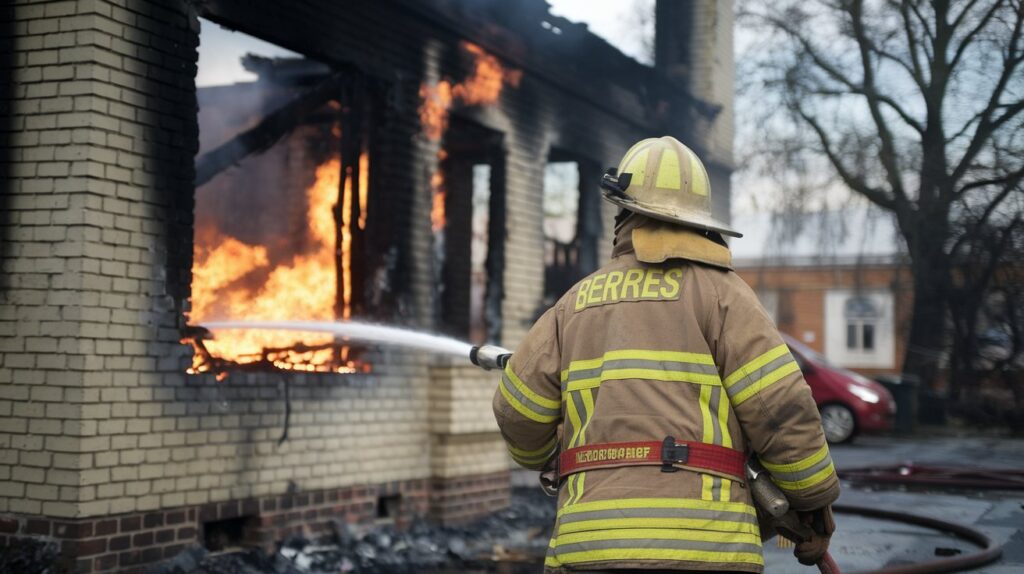
Understanding how fire spreads is fundamental to workplace safety and HSE protocols. Fire spreads through four primary methods: conduction, convection, radiation, and direct burning. Each mechanism poses unique risks in industrial and commercial environments, requiring specific prevention and response strategies to protect lives and property.
The 4 Methods How Fire Spreads in HSE
Fire spreads by 4 methods that every safety professional must understand. These mechanisms – conduction, convection, radiation, and direct burning – operate simultaneously during fire incidents. According to the National Fire Protection Association (NFPA), over 37,000 workplace fires occur annually in the United States, with each spreading method contributing to property damage exceeding $2.3 billion in 2024.
The 4 ways fire spreads HSE protocols address these mechanisms through comprehensive prevention strategies. Modern fire safety engineering considers how each method interacts with building materials, ventilation systems, and human behavior patterns. Understanding these fundamentals enables safety managers to develop more effective emergency response plans and fire prevention measures.
Conduction Fire Spread Mechanism
Conduction fire spread occurs when heat transfers through solid materials without flame contact. This process happens when molecules vibrate and transfer thermal energy through metals, concrete, and other conductive materials. In industrial settings, steel beams and metal pipes are primary conduits for conduction, with temperatures reaching 1,200°F potentially weakening structural integrity within 30 minutes of exposure.
Convection Fire Spread Principles
Convection fire spread involves heat transfer through moving air currents and hot gases. This mechanism causes fires to move vertically through stairwells, elevator shafts, and HVAC systems. Research from the Fire Protection Research Foundation shows that convection can spread fires 10 times faster vertically than horizontally, making multi-story buildings particularly vulnerable to rapid fire escalation.
Radiation Fire Spread Dynamics
Radiation fire spread transfers heat through electromagnetic waves without requiring direct contact or air movement. This invisible mechanism can ignite materials up to 30 feet away from the original fire source. Thermal radiation intensity follows the inverse square law, meaning doubling the distance reduces heat exposure by 75%, which influences fire barrier placement in building design.
Direct Burning Fire Characteristics
Direct burning fire represents the most obvious spread method, where flames physically contact combustible materials. This process involves flame fronts moving across surfaces at speeds ranging from 3-30 feet per minute, depending on fuel type and environmental conditions. The 2024 International Fire Code requires minimum separation distances based on direct burning calculations for hazardous material storage.
Heat Transfer Through Metal Pipes and Structural Elements
The question what is the spread of fire by transfer of heat through metal pipes called refers specifically to conduction. Metal piping systems create thermal bridges that can transmit dangerous heat levels throughout buildings. Steel pipes lose 50% of their load-bearing capacity when temperatures reach 1,000°F, typically occurring within 15-20 minutes of direct fire exposure.
Safety protocols require fire-resistant insulation around critical metal infrastructure. The American Society for Testing and Materials (ASTM) E119 standard mandates that structural steel receive fire protection ratings of 1-4 hours depending on building occupancy and height. Proper insulation can delay heat transfer by up to 300%, providing crucial evacuation time.
How Fire Safety Addresses Each Spread Method
Comprehensive fire safety strategies must address all four spread mechanisms simultaneously. Modern HSE programs integrate passive and active protection systems targeting specific spread methods. Passive systems include fire-resistant materials and compartmentalization, while active systems encompass sprinklers, detection, and suppression technologies tailored to interrupt each spread mechanism.
The National Institute for Standards and Technology (NIST) research demonstrates that integrated fire protection systems reduce spread rates by 80% when properly designed. HSE professionals must consider building layout, occupancy patterns, and material properties when developing fire safety plans that address conduction, convection, radiation, and direct burning scenarios.
Limiting Conduction Spread in Workplace Design
Effective strategies for limiting the spread of fire through conduction include thermal barriers and fire-resistant insulation. Building codes require fire stops at penetrations where pipes and conduits pass through fire-rated walls. These measures can reduce heat transfer rates by 90% and maintain structural integrity for prescribed time periods during emergencies.
Controlling Convection Through HVAC Management
Convection fire spread control relies heavily on proper HVAC system design and emergency shutdown procedures. Fire dampers automatically close when temperatures reach 165°F, preventing heated air circulation. Modern buildings incorporate smoke management systems that can create positive pressure zones, directing smoke away from evacuation routes and limiting fire spread through air movement.
How Smoke Spreads in Fire Incidents
Understanding what are the 4 ways smoke can spread is crucial for life safety planning. Smoke movement follows the same principles as fire spread: conduction carries heat through walls generating smoke, convection moves smoke through air currents, radiation heats adjacent materials producing additional smoke, and direct contact with flames creates immediate smoke production.
Smoke presents greater immediate danger than flames in most fire scenarios. The National Fire Protection Association reports that smoke inhalation causes 75% of fire-related deaths in the United States. Toxic gases including carbon monoxide, hydrogen cyanide, and other byproducts accumulate rapidly, creating life-threatening conditions within minutes of fire ignition.
Modern Fire Spread Prevention Technologies
Advanced fire prevention systems in 2024-2025 integrate smart sensors and AI-powered detection to identify fire spread patterns in real-time. These systems monitor temperature gradients, air movement, and smoke density to predict spread patterns and automatically activate targeted suppression systems. HSE technology now includes predictive analytics that can forecast fire behavior based on building conditions and weather patterns.
Emerging technologies include smart fire barriers that activate based on heat sensors, advanced suppression agents that target specific combustion reactions, and integrated building management systems that coordinate fire response across all building systems. These innovations reduce fire spread effectiveness by up to 95% compared to traditional protection methods.
Smart Detection Systems for Early Intervention
Modern fire detection incorporates multi-sensor technology that identifies fires based on heat signatures, smoke particles, and gas emissions. These systems can distinguish between actual fires and false alarms with 99.7% accuracy, enabling faster response times while reducing unnecessary evacuations that can create safety hazards.
Automated Suppression Targeting Spread Mechanisms
Next-generation suppression systems target specific fire spread mechanisms automatically. Water mist systems address convection by cooling air temperatures, foam systems prevent radiation by creating thermal barriers, and specialized agents interrupt the chemical reactions driving direct burning. These targeted approaches prove 40% more effective than traditional sprinkler systems.
HSE Training Requirements for Fire Spread Understanding
Effective HSE training programs must educate workers about all four fire spread mechanisms and appropriate responses. The Occupational Safety and Health Administration (OSHA) requires annual fire safety training that covers fire behavior, evacuation procedures, and emergency response protocols. Training must address how environmental factors influence fire spread rates and intensity.
Comprehensive training programs include hands-on demonstrations of fire behavior, simulation exercises that replicate various spread scenarios, and regular drills that test evacuation procedures. Safety professionals report 60% better emergency response outcomes in facilities with comprehensive fire spread education programs compared to basic fire safety training.
Related video about how fire spreads (HSE)
This video complements the article information with a practical visual demonstration.
FAQ – Common Questions
How does fire spread fire safety?
Fire spreads through four primary mechanisms in fire safety: conduction (heat transfer through solids), convection (heat movement through air), radiation (electromagnetic heat transfer), and direct burning (flame contact). Each method requires specific prevention and suppression strategies in comprehensive fire safety programs.
What are the 4 ways a fire can spread?
The four ways fire spreads are conduction, convection, radiation, and direct burning. Conduction transfers heat through solid materials, convection moves heat through air currents, radiation transmits heat through electromagnetic waves, and direct burning occurs when flames physically contact combustible materials.
How do fires usually spread?
Fires usually spread through multiple mechanisms simultaneously, with convection being the fastest method vertically and radiation enabling long-distance ignition. In buildings, fires typically spread upward through convection in stairwells and across horizontally through radiation and direct burning contact with combustible materials.
What are the 4 ways smoke can spread?
Smoke spreads through the same four mechanisms as fire: conduction heating materials to produce smoke, convection carrying smoke through air movement, radiation heating adjacent materials creating additional smoke, and direct flame contact generating immediate smoke production. Convection typically causes the fastest smoke movement through buildings.
What is the spread of fire by transfer of heat through metal pipes called?
The spread of fire through heat transfer via metal pipes is called conduction. This mechanism occurs when thermal energy moves through solid materials without flame contact. Metal pipes can reach dangerous temperatures within 15-20 minutes, potentially igniting nearby combustible materials and compromising structural integrity.
How can workplaces limit fire spread effectively?
Workplaces can limit fire spread by implementing fire-resistant barriers, proper compartmentalization, automatic suppression systems, and regular maintenance of fire protection equipment. Effective strategies include fire stops at wall penetrations, HVAC emergency shutdowns, thermal insulation on metal structures, and comprehensive employee training on fire behavior and evacuation procedures.
| Fire Spread Method | How It Works | Prevention Strategy |
|---|---|---|
| Conduction | Heat transfer through solid materials like metal pipes and beams | Fire-resistant insulation and thermal barriers |
| Convection | Heat movement through air currents and hot gases | HVAC controls and smoke management systems |
| Radiation | Electromagnetic heat transfer without direct contact | Proper spacing and fire-resistant barriers |
| Direct Burning | Flames physically contacting combustible materials | Fuel management and suppression systems |