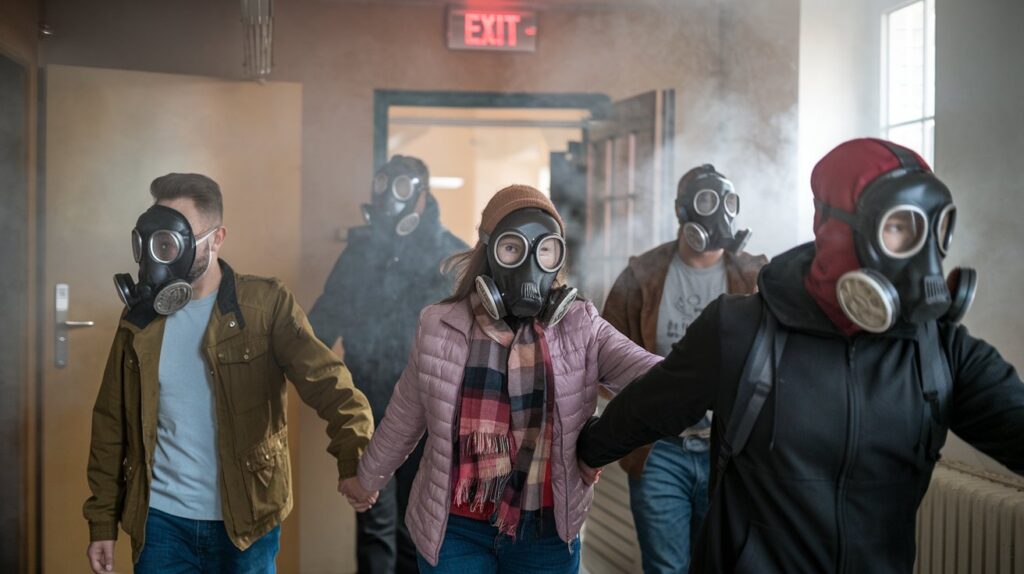
Safe evacuation in case of smoke requires immediate action following specific protocols that can save lives. During smoke-filled emergencies, visibility drops to near zero within minutes, making proper evacuation procedures critical for survival. This comprehensive guide provides essential techniques and emergency planning strategies to navigate smoky areas during evacuation safely.
Understanding Smoke Behavior During Emergencies
Smoke rises and spreads rapidly through buildings, creating toxic environments that pose immediate threats to evacuees. In the United States, the National Fire Protection Association reports that smoke inhalation causes approximately 50-80% of fire-related deaths annually. Smoke-filled areas can reduce visibility to less than 10 feet within two minutes of a fire starting, making navigation extremely dangerous without proper preparation.
Temperature variations significantly affect smoke movement throughout structures. Hot smoke rises toward ceilings and upper floors, while cooler air remains closer to ground level. Understanding this principle is crucial when determining the safest breathing area during evacuation procedures. Modern building materials can produce toxic gases when burning, including hydrogen cyanide and carbon monoxide, making rapid evacuation essential regardless of fire size.
Toxic Gas Composition in Modern Smoke
Contemporary building materials release dangerous chemicals when burning, creating smoke that’s significantly more toxic than in previous decades. Carbon monoxide levels can reach lethal concentrations within minutes, while synthetic materials produce hydrogen cyanide, ammonia, and other deadly compounds. The Consumer Product Safety Commission documented over 2,400 deaths from smoke inhalation in 2024, emphasizing the critical importance of immediate safe evacuation procedures.
Smoke Spread Patterns in Different Building Types
Residential homes experience different smoke movement patterns compared to commercial buildings due to construction differences and ventilation systems. Single-story homes allow horizontal smoke spread, while multi-story buildings create vertical smoke shafts through stairwells and elevator shafts. Office buildings with HVAC systems can either contain or accelerate smoke spread depending on system design and emergency protocols. Understanding your building’s specific evacuation route characteristics is essential for developing effective emergency plans.
Essential Pre-Evacuation Preparation
Successful safe evacuation in case of smoke begins with comprehensive preparation before emergencies occur. The Federal Emergency Management Agency recommends that every American household maintain updated evacuation plans reviewed quarterly. Essential preparation includes identifying multiple exit routes, establishing family meeting points, and ensuring all household members understand emergency procedures.
Creating detailed fire safety plans specific to your location significantly improves survival chances during smoke emergencies. These plans must account for different scenarios, including blocked primary exits and varying smoke conditions. Regular practice drills help family members and employees react instinctively during high-stress emergency situations when visibility and thinking may be compromised by smoke exposure.
Developing Comprehensive Fire Safety Plans
Effective fire safety plan templates must include detailed floor plans with multiple escape routes marked clearly for all building occupants. Plans should designate primary and secondary evacuation routes, identify locations of fire extinguishers and emergency equipment, and establish exterior meeting points at safe distances from buildings. The National Fire Protection Association requires businesses to conduct evacuation drills at least annually, with many states mandating more frequent practice sessions for high-occupancy buildings.
Emergency Supply Kit Essentials
Properly equipped emergency kits support safe evacuation procedures and post-evacuation survival. Essential items include battery-powered flashlights, emergency radios, first aid supplies, and N95 respirator masks for smoke protection. The American Red Cross recommends maintaining three-day supply kits for each household member, with additional supplies for pets. Emergency contact lists, copies of important documents, and cash should be stored in waterproof containers for rapid access during evacuation emergencies.
The 5 P’s of Evacuation Protocol
The 5 P’s of evacuation provide a systematic approach to emergency preparedness that emergency responders nationwide recommend for civilian safety. These five priorities – People, Prescriptions, Papers, Personal computers, and Pictures – guide rapid decision-making during smoke emergencies when time is critically limited. Following this protocol ensures that evacuees gather essential items without delay that could prove dangerous in smoke-filled environments.
Professional emergency management services emphasize practicing the 5 P’s evacuation system regularly to build muscle memory for crisis situations. During actual emergencies, smoke inhalation can impair cognitive function within minutes, making pre-planned responses crucial for survival. The Federal Emergency Management Agency’s 2024 guidelines specifically recommend the 5 P’s framework for wildfire evacuations, which often involve extensive smoke exposure during escape procedures.
Immediate Response When Encountering Smoke
When encountering smoke during evacuation, immediate actions determine survival outcomes for building occupants. The first priority involves assessing smoke density and temperature to determine whether evacuation through the affected area is possible or if alternative routes are necessary. Emergency responders recommend the door-touch test before opening any door during evacuation – if doors feel hot, smoke and fire likely exist beyond that point.
Proper breathing techniques become critical when navigating smoky areas during emergency evacuations. Stay low to the ground where cleaner air typically exists, covering nose and mouth with cloth when possible. The International Association of Fire Chiefs recommends crawling below smoke level while feeling along walls for guidance when visibility is severely compromised. Never use elevators during smoke emergencies, as they can malfunction and trap occupants in dangerous areas.
Low-Crawling Evacuation Techniques
Professional evacuation procedures emphasize staying below the smoke line, typically 12-24 inches from floor level where breathable air remains available longer. Crawl on hands and knees while keeping your head as low as possible, using one hand to feel along walls for navigation guidance. This technique prevents disorientation in smoke-filled environments while accessing the safest breathing area available during evacuation. Practice this method during family fire drills to build familiarity with the uncomfortable but life-saving technique.
Door Safety Assessment Protocol
Before opening any door during smoke evacuation, check the door handle and surface temperature using the back of your hand. Hot doors indicate fire or intense heat beyond the opening, requiring immediate route changes to alternative exits. If doors feel cool, open them slowly while staying to one side, ready to close quickly if smoke or heat rushes through. This assessment prevents evacuees from entering areas with dangerous smoke concentration levels that could prove fatal within minutes.
Workplace Evacuation Procedures in Smoke Emergencies
Emergency evacuation procedures in the workplace require coordinated responses involving designated safety wardens, clear communication systems, and practiced escape routes suitable for all employees. The Occupational Safety and Health Administration mandates that employers provide comprehensive evacuation training and maintain updated emergency action plans reviewed annually. Workplace evacuations become particularly challenging in smoke conditions due to larger building sizes and higher occupant numbers requiring organized movement.
Modern office buildings present unique challenges during smoke-filled evacuations due to complex layouts, multiple floors, and varied occupancy patterns throughout different times of day. Emergency coordinators must account for employees with disabilities, visitors unfamiliar with building layouts, and potential panic responses that can impede orderly evacuation. Successful workplace evacuation depends on regular training, clear signage, and backup communication systems that function when primary systems fail during emergencies.
Designated Safety Warden Responsibilities
Safety wardens play crucial roles in workplace evacuation procedures by ensuring all employees evacuate safely and accounting for personnel at designated assembly points. These trained individuals must know building layouts, emergency equipment locations, and procedures for assisting employees with special needs during smoke emergencies. Wardens conduct final sweeps of assigned areas before evacuating themselves, checking restrooms, conference rooms, and other spaces where employees might shelter incorrectly during evacuation procedures.
Communication Systems During Emergencies
Effective emergency communication systems provide clear, audible instructions even when smoke alarms and building systems create high noise levels. Public address systems, emergency lighting, and backup communication methods ensure all occupants receive evacuation instructions regardless of their location within buildings. Modern systems include visual alerts for hearing-impaired employees and multilingual announcements in diverse workplace environments. Regular testing of these systems ensures functionality during actual smoke emergency situations.
Hospital and Healthcare Facility Evacuations
Evacuation procedures in hospitals present unique challenges due to patient mobility limitations, life-support equipment dependencies, and the need for continuous medical care during emergencies. Healthcare facilities must maintain detailed evacuation plans addressing horizontal and vertical patient movement while ensuring medical equipment continuity. The Joint Commission requires hospitals to conduct evacuation drills twice yearly, with many facilities practicing smoke scenario evacuations to prepare staff for real emergencies.
Patient safety during smoke-filled hospital evacuations requires specialized equipment and trained personnel capable of moving patients quickly while maintaining medical care standards. Evacuation chairs, specialized stretchers, and portable oxygen supplies become essential tools when elevators cannot be used during smoke emergencies. Healthcare staff must balance speed requirements with patient care needs, making preparation and training crucial for successful outcomes during actual emergency situations.
Home Fire Safety and Evacuation Planning
Residential fire safety plans for homes must account for family member ages, physical capabilities, and different emergency scenarios that may require various evacuation approaches. The National Fire Protection Association recommends that families practice evacuation routes monthly, including nighttime drills when visibility is naturally reduced and smoke detection becomes more critical for survival. Home evacuation plans should include multiple exit routes from each room and designated meeting locations outside the home structure.
Effective home evacuation procedures require consideration of children, elderly family members, and pets during smoke emergencies. Children need special training to overcome natural tendencies to hide during frightening situations, while elderly family members may require assistance navigating during limited visibility conditions. Smoke detectors should be installed in every bedroom, hallway, and level of homes, with monthly battery testing ensuring functionality when emergencies occur. Modern interconnected smoke detection systems provide earlier warnings and more time for safe evacuation.
Bedroom Evacuation Strategies
Bedroom evacuation planning requires multiple exit strategies since occupants may be sleeping when smoke emergencies begin. Primary routes typically use hallway access to main exits, while secondary routes may include windows with escape ladders for upper floors. Keep bedroom doors closed during sleep to slow smoke infiltration, providing additional time for safe evacuation procedures. Practice evacuation from bedrooms in darkness to simulate realistic emergency conditions when smoke reduces visibility significantly.
Special Considerations for Children and Elderly
Children require specific training to respond appropriately during smoke evacuation emergencies rather than following natural instincts to hide or seek parents first. Teach children to exit immediately upon hearing smoke alarms and proceed to predetermined meeting locations outside homes. Elderly family members may need assistance during evacuations due to mobility limitations or medical conditions requiring special equipment. Plan evacuation assistance roles for family members and practice procedures regularly to ensure smooth coordination during actual smoke emergency situations.
Post-Evacuation Safety Procedures
After completing safe evacuation from smoke-filled areas, evacuees must follow specific protocols to ensure continued safety and provide assistance to emergency responders. Never re-enter buildings until fire departments officially declare them safe, even if smoke appears to be dissipating. Smoke can continue circulating through building systems and hidden fire sources may reignite, creating renewed danger for anyone attempting premature re-entry.
Emergency responders need accurate information about potentially missing persons and building conditions from evacuees who successfully escaped smoke-filled areas. Provide headcounts at designated assembly points and report any known individuals who may remain inside structures. Medical evaluation may be necessary for anyone who experienced significant smoke exposure, as respiratory damage can develop hours after initial exposure. The American Lung Association recommends medical assessment for anyone experiencing breathing difficulties, chest pain, or persistent coughing after smoke inhalation during evacuation.
Related video about safe evacuation in case of smoke
This video complements the article information with a practical visual demonstration.
Important things to know about safe evacuation in case of smoke
What is the best way to evacuate if there is smoke present?
Stay low to the ground below the smoke line, cover your nose and mouth with cloth, and crawl along walls for navigation guidance. Check doors for heat before opening, use stairs instead of elevators, and proceed to predetermined evacuation routes while avoiding areas with heavy smoke concentration.
What are the 5 P’s of evacuation?
The 5 P’s are People (ensure all family members evacuate), Prescriptions (essential medications), Papers (important documents), Personal computers (backup drives/devices), and Pictures (irreplaceable photos). This framework helps prioritize what to gather quickly during emergency evacuations without dangerous delays.
What should you do if you encounter a smoky area during evacuation?
Immediately assess smoke density and temperature. If smoke is thick or hot, find alternative evacuation routes. If passage is necessary, stay as low as possible, breathe through cloth coverings, and move quickly while feeling along walls for guidance. Never proceed through areas where smoke is too thick to see more than a few feet ahead.
When evacuating a smoke-filled room, the safest breathing area is likely to be?
The safest breathing area is typically 12-24 inches above the floor level, where cleaner air remains available longer due to smoke’s natural tendency to rise. Crawl on hands and knees to stay in this zone while evacuating, as breathable air concentrations are highest near floor level during smoke emergencies.
How often should evacuation plans be practiced and updated?
Practice evacuation procedures monthly with all household or workplace occupants, including nighttime drills to simulate realistic emergency conditions. Review and update written evacuation plans quarterly or whenever building layouts change, new occupants join, or emergency contact information changes. Annual professional reviews ensure plans meet current safety standards.
What emergency supplies should be readily available for smoke evacuations?
Maintain flashlights, N95 respirator masks, emergency contact lists, portable radios, first aid supplies, and copies of important documents in easily accessible locations. Keep emergency supplies in multiple locations throughout buildings to ensure availability regardless of which evacuation route becomes necessary during smoke emergencies.
| Key Safety Aspect | Critical Implementation | Life-Saving Benefit |
|---|---|---|
| Low Crawling Technique | Stay 12-24 inches above floor level | Access to cleaner breathing air |
| 5 P’s Evacuation Protocol | Pre-planned essential item gathering | Rapid evacuation without delays |
| Multiple Escape Routes | Primary and secondary evacuation paths | Options when primary routes blocked |
| Monthly Practice Drills | Regular evacuation procedure training | Instinctive responses during emergencies |