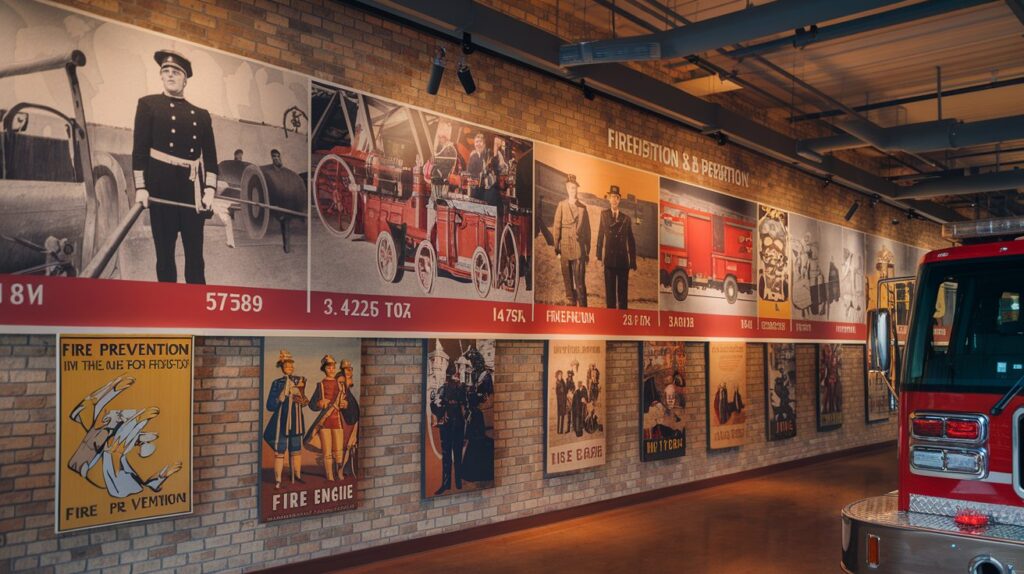
The history of fire fighting and prevention spans thousands of years, evolving from ancient bucket brigades to today’s sophisticated emergency response systems. This comprehensive guide examines how firefighting techniques developed across civilizations, focusing on major innovations that shaped modern fire departments in the United States and established the foundation for contemporary fire safety protocols.
Ancient Beginnings: The Birth of Organized Fire Response
The earliest forms of fire fighting and prevention emerged in ancient civilizations around 2700 BCE, when communities first recognized the need for coordinated responses to fire emergencies. Archaeological evidence from Egypt, Greece, and Rome reveals sophisticated approaches to fire management that laid the groundwork for modern firefighting techniques.
Ancient firefighting equipment included leather buckets, bronze pumps, and primitive ladder systems. These early innovations demonstrated humanity’s growing understanding of fire behavior and the importance of rapid response times in containing blazes before they spread throughout densely populated urban areas.
Egypt’s Engineering Marvel: Early Fire Pumps (2700 BCE)
Egyptian engineers developed the world’s first mechanical fire fighting equipment using bronze hand pumps and leather hoses. These devices could project water streams up to 40 feet, representing a revolutionary advancement in fire suppression technology. Egyptian fire brigades organized around these pumps became the template for structured fire department operations that would influence civilizations for millennia.
Greek Innovation: Scientific Fire Prevention (250 BCE)
Greek scientists like Ctesibius invented the first pressure-operated fire engines, incorporating pistons and valves that dramatically improved water delivery efficiency. Their fire prevention methods included building codes that required specific distances between structures and the use of fire-resistant materials. These Greek innovations established the scientific foundation for modern fire safety engineering principles.
Rome’s Revolutionary Fire Brigade: The Vigiles System
The Roman Empire created history’s first professional fire department with the establishment of the Vigiles in 27 BCE under Emperor Augustus. This organized force of 7,000 firefighters operated across Rome’s 14 districts, providing 24-hour fire protection and emergency response services that modern departments still emulate today.
The Vigiles pioneered many firefighting techniques including coordinated bucket chains, building demolition to create firebreaks, and the use of wet blankets and vinegar for flame suppression. Their organizational structure, with commanding officers, specialized units, and geographic coverage areas, became the blueprint for fire service organization worldwide.
Professional Training and Equipment (27 BCE – 476 CE)
Roman firefighters received formal training in fire fighting and prevention techniques, including ladder operations, water management, and building construction knowledge. They utilized bronze pumps, leather buckets, axes, hooks for pulling down burning structures, and even primitive breathing apparatus made from wet sponges. This professional approach to firefighter education established standards that influence modern fire academy curricula.
Legal Framework and Fire Codes
Rome developed comprehensive fire prevention laws including building height restrictions, mandatory water storage requirements, and penalties for fire code violations. These regulations represented the world’s first systematic approach to fire safety legislation, creating legal precedents that form the basis of contemporary fire codes throughout the United States and other developed nations.
Medieval Period: The Dark Ages of Fire Fighting
Following Rome’s fall in 476 CE, organized firefighting declined dramatically across Europe. Medieval communities relied primarily on bucket brigades and religious interventions, losing much of the technical knowledge and organizational expertise developed by ancient civilizations. This period lasted nearly 1,000 years, during which major urban fires regularly devastated entire cities.
Despite technological regression, some innovations emerged during the medieval period. Monastery communities maintained water supplies and developed early fire prevention practices. The guild system also contributed to fire safety by establishing trade regulations and maintaining equipment standards, though these efforts remained localized and inconsistent.
The Great Fire of London: Catalyst for Modern Fire Services
The Great Fire of London in 1666 destroyed over 13,000 houses and 87 churches, serving as a watershed moment that revolutionized fire fighting and prevention practices. This catastrophic event exposed the inadequacies of medieval firefighting methods and sparked innovations that would shape modern fire services across the globe, including the American colonies.
Following the disaster, London implemented comprehensive building codes requiring brick construction, wider streets, and organized fire brigades. These reforms influenced colonial American settlements and established principles that continue to guide urban planning and fire prevention strategies in contemporary United States cities.
Insurance Company Fire Brigades (1667-1800)
Insurance companies created private fire brigades to protect their clients’ properties, marking the beginning of professional fire department services in the English-speaking world. These companies developed distinctive fire marks, improved equipment including leather hoses and hand-operated pumps, and established response protocols that influenced early American fire services. This insurance-based model directly impacted firefighting development in colonial America.
Building Code Revolution and Urban Planning
Post-fire London building regulations mandated fire-resistant materials, standardized chimney construction, and improved street layouts to facilitate fire department access. These fire prevention measures became templates for colonial American building codes and established urban planning principles that prioritize fire safety. Modern fire codes in the United States trace their origins directly to these 17th-century innovations.
History of Firefighting in the United States: Colonial Foundations
American firefighting began in 1648 when New Amsterdam (now New York) appointed fire wardens and required citizens to maintain leather buckets and ladders. The first organized fire department in the United States was established in Philadelphia in 1736 by Benjamin Franklin, who founded the Union Fire Company after studying European fire prevention methods.
Colonial fire companies operated as volunteer organizations, with community members contributing equipment and labor. These early American fire departments developed distinctly American approaches to fire fighting and prevention, including democratic governance structures and community-based funding models that continue to characterize many US fire departments today.
Benjamin Franklin’s Revolutionary Approach (1736)
Franklin’s Union Fire Company introduced systematic fire prevention education, regular equipment inspections, and coordinated response protocols. His innovations included fire insurance systems, improved building codes, and public fire safety education programs. Franklin’s model spread throughout the colonies and established the volunteer fire service tradition that remains central to American firefighting culture.
Colonial Equipment and Techniques
Early American firefighters used hand-operated pumpers, leather buckets, ladders, and hooks for pulling down buildings. Colonial firefighting equipment evolved from European designs but incorporated American innovations like longer ladders for taller buildings and improved pump mechanisms. These technological adaptations reflected the unique challenges of American urban development and climate conditions.
Industrial Revolution: Mechanization of Fire Services
The 19th century brought revolutionary changes to fire fighting and prevention with the introduction of steam-powered fire engines, professional departments, and telegraph alarm systems. The first steam fire engine appeared in New York City in 1841, dramatically improving water pressure and firefighting effectiveness during major urban blazes.
Professional fire departments replaced volunteer companies in major American cities between 1850-1900. Cities like Boston, New York, and Chicago established paid firefighting forces with standardized training, equipment, and response procedures. This professionalization coincided with rapid urban growth and increasing fire risks from industrial development.
Steam Engine Revolution (1841-1900)
Steam-powered fire engines increased water pressure from 50 PSI to over 200 PSI, enabling firefighters to reach upper floors of tall buildings and penetrate deep-seated fires. These machines required specialized training and maintenance, contributing to the professionalization of American firefighting. By 1900, most major US cities had replaced hand-pumped equipment with steam engines.
Telegraph and Communication Systems
Telegraph fire alarm systems, first installed in Boston in 1852, revolutionized emergency response by enabling rapid notification and coordination between fire departments and dispatch centers. These communication improvements reduced response times from 15-20 minutes to 3-5 minutes, significantly improving fire suppression effectiveness and saving countless lives and properties throughout American cities.
20th Century Innovations: Modern Fire Fighting Technology
The 20th century witnessed unprecedented advances in fire fighting and prevention technology, including motorized fire trucks, aerial ladders, breathing apparatus, and chemical suppression systems. These innovations transformed firefighting from a primarily manual labor activity into a highly technical profession requiring extensive training and specialized equipment.
Major disasters like the 1906 San Francisco earthquake and fire, the Triangle Shirtwaist Factory fire in 1911, and various urban conflagrations drove continuous improvements in fire safety codes, equipment design, and emergency response protocols. These events shaped modern fire prevention strategies and established safety standards that protect millions of Americans today.
Motorization and Aerial Equipment (1900-1950)
Motorized fire trucks replaced horse-drawn equipment between 1900-1920, dramatically improving response times and equipment capacity. Aerial ladder trucks, first introduced in 1898, evolved to reach heights of 100+ feet by 1950. These firefighting equipment advances enabled effective response to high-rise building fires and rescued thousands of people from dangerous situations in American cities.
Breathing Apparatus and Safety Gear
Self-contained breathing apparatus (SCBA) development between 1945-1970 revolutionized firefighter safety and effectiveness. Modern SCBA systems provide 30-60 minutes of clean air, enabling firefighters to penetrate smoke-filled environments and perform interior attacks on structure fires. This equipment, combined with improved protective clothing, has reduced firefighter fatalities by over 80% since 1970.
Contemporary Fire Services: 21st Century Developments
Modern American fire departments serve over 330 million people through approximately 27,000 fire stations nationwide. Today’s fire services integrate advanced technology including thermal imaging cameras, GPS navigation, computer-aided dispatch systems, and sophisticated foam and chemical suppression agents for specialized fire types.
Contemporary fire fighting and prevention emphasizes community risk reduction, emergency medical services, hazardous materials response, and technical rescue operations. Fire departments now respond to medical emergencies (70% of all calls), vehicle accidents, natural disasters, and terrorism-related incidents, expanding far beyond traditional firefighting roles to become comprehensive emergency service providers.
Related video about history of fire fighting and prevention
This video complements the article information with a practical visual demonstration.
Key Questions and Answers
When was the first fire department established in the United States?
The first organized fire department in the United States was established in Philadelphia in 1736 by Benjamin Franklin. The Union Fire Company served as the model for volunteer fire companies throughout the American colonies and established many principles that continue to guide American fire services today.
Who founded the first professional fire department in history?
Emperor Augustus founded the first professional fire department in 27 BCE when he established the Vigiles in Rome. This force of 7,000 trained firefighters operated 24/7 across Rome’s 14 districts and created the organizational structure that modern fire departments still follow today.
What major innovations shaped modern firefighting equipment?
Key innovations include steam-powered fire engines (1841), motorized fire trucks (1900-1920), aerial ladder trucks (1898), self-contained breathing apparatus (1945-1970), and modern foam suppression systems. These technologies dramatically improved firefighter safety and fire suppression effectiveness.
How did the Great Fire of London influence American fire prevention?
The Great Fire of London (1666) led to revolutionary building codes requiring fire-resistant materials, wider streets, and organized fire brigades. These innovations directly influenced colonial American building standards and urban planning principles that prioritize fire safety in modern US cities.
What role do modern fire departments play beyond firefighting?
Contemporary fire departments respond to medical emergencies (70% of calls), vehicle accidents, hazardous materials incidents, technical rescues, and natural disasters. They’ve evolved from purely firefighting organizations into comprehensive emergency service providers serving entire communities’ safety needs.
How has firefighter safety improved over the past century?
Firefighter safety has improved dramatically through self-contained breathing apparatus, advanced protective clothing, thermal imaging cameras, improved training protocols, and better communication systems. These advances have reduced firefighter fatalities by over 80% since 1970 while maintaining effective fire suppression capabilities.
| Historical Period | Key Innovation | Impact on Modern Fire Services |
|---|---|---|
| Ancient Rome (27 BCE) | Professional Vigiles Fire Brigade | Established organizational structure and 24/7 operations |
| Colonial America (1736) | Franklin’s Union Fire Company | Created volunteer fire service tradition and community funding |
| Industrial Era (1841) | Steam-Powered Fire Engines | Dramatically improved water pressure and suppression capability |
| Modern Era (1945-1970) | Self-Contained Breathing Apparatus | Revolutionized firefighter safety and interior attack capabilities |
| 21st Century (2000-2025) | Integrated Emergency Services | Expanded role to comprehensive community emergency response |