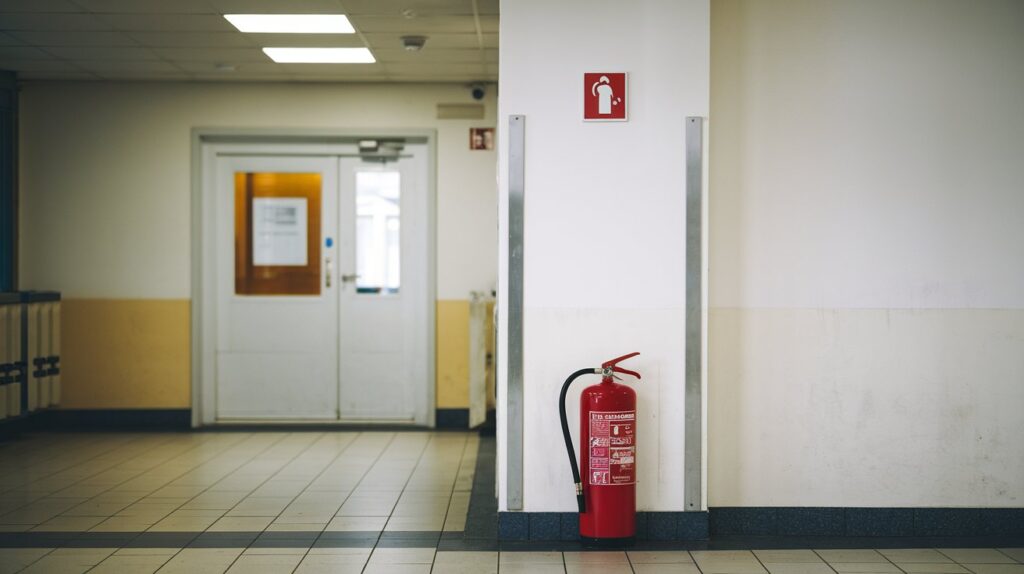
Fire protection systems in healthcare are critical safety measures that protect patients, staff, and medical equipment from fire hazards. These integrated systems include fire detection, suppression, alarm systems, and emergency evacuation protocols specifically designed for healthcare environments where vulnerable patients require specialized protection.
Types of Fire Protection Systems in Healthcare Facilities
Healthcare facilities require comprehensive fire protection systems that work together to ensure maximum safety. The four primary types include automatic sprinkler systems, fire detection and alarm systems, gaseous suppression systems, and emergency evacuation systems. Each system serves a specific purpose and must meet strict regulatory standards set by the Joint Commission and NFPA codes for healthcare environments.
Modern healthcare fire protection systems integrate advanced technology with traditional methods to provide layered protection. These systems must accommodate the unique challenges of healthcare environments, including the need to protect non-ambulatory patients, maintain critical medical equipment operations, and ensure uninterrupted patient care during emergencies. The selection and design of these systems depend on the specific areas within the healthcare facility, occupancy levels, and types of medical procedures performed.
Automatic Sprinkler Systems for Healthcare
Automatic sprinkler systems are the most common fire protection method in healthcare facilities, providing rapid water-based fire suppression. These systems activate automatically when heat reaches predetermined temperatures, typically between 155-200°F depending on the specific healthcare area. In 2024, wet pipe sprinkler systems remain the preferred choice for most healthcare areas, while dry pipe systems are used in areas prone to freezing temperatures.
Fire Detection and Alarm Systems
Fire detection systems in healthcare facilities utilize smoke detectors, heat detectors, and flame detectors strategically placed throughout the building. These systems provide early warning capabilities essential for patient evacuation and staff response. Advanced systems include voice evacuation capabilities and integration with nurse call systems to ensure immediate notification to healthcare staff responsible for patient care and evacuation assistance.
Solutions for Hospital and Healthcare Facilities
Comprehensive fire protection solutions for hospitals require customized approaches based on facility size, patient acuity levels, and specific medical services provided. Large hospitals typically require integrated systems that include central monitoring stations, multiple fire pumps, and redundant detection systems. Smaller healthcare facilities may utilize simplified systems while still maintaining compliance with Joint Commission standards and local fire codes.
Modern healthcare facilities implement smart fire protection systems that utilize IoT technology and advanced monitoring capabilities. These systems provide real-time status updates, predictive maintenance alerts, and integrated emergency response coordination. The integration of fire protection systems with building automation systems allows for enhanced control of HVAC systems, elevator operations, and emergency lighting during fire emergencies.
Operating Room Fire Protection Requirements
Operating room fire protection requires specialized systems due to the presence of oxygen-rich environments and electrical equipment. Clean agent suppression systems are often preferred over water-based sprinklers to protect sensitive surgical equipment and prevent water damage. The Joint Commission requires specific fire safety protocols for operating rooms, including staff training on fire triangle awareness and immediate response procedures.
Patient Care Area Protection Strategies
Patient care areas require fire protection systems designed to accommodate non-ambulatory patients and medical equipment. These areas typically utilize smoke compartmentalization strategies, allowing for horizontal evacuation when vertical evacuation is not feasible. Fire-rated barriers and automatic door closing systems create safe refuge areas where patients can be relocated during emergency situations.
Joint Commission Fire Safety Requirements
The Joint Commission fire safety requirements establish comprehensive standards for healthcare fire protection systems and emergency preparedness. These standards require healthcare facilities to conduct quarterly fire drills, maintain detailed fire safety documentation, and ensure all staff receive appropriate fire safety training. In 2024, the Joint Commission updated requirements to include enhanced cybersecurity measures for fire protection systems and improved integration with emergency communication systems.
Joint Commission fire drill requirements mandate that healthcare facilities conduct fire drills at least quarterly for each shift, with additional requirements for high-risk areas such as operating rooms and intensive care units. These drills must demonstrate proper patient evacuation procedures, staff response protocols, and system functionality. Documentation must include drill timing, participant names, areas of concern, and corrective action plans for identified deficiencies.
NFPA Standards and Healthcare Fire Protection
NFPA standards provide the technical foundation for healthcare fire protection system design and installation. NFPA 101 Life Safety Code establishes occupancy requirements specific to healthcare facilities, while NFPA 13 governs sprinkler system design. NFPA 72 addresses fire alarm and emergency communication systems, requiring specific notification methods for healthcare environments where patients may have hearing or cognitive impairments.
Recent updates to NFPA codes in 2024 include enhanced requirements for battery backup systems, improved smoke detection in patient sleeping areas, and updated standards for clean agent suppression systems in healthcare applications. These updates reflect technological advances and lessons learned from healthcare fire incidents across the United States.
NFPA 241 Temporary Fire Protection
NFPA 241 temporary fire alarm systems are increasingly important during healthcare facility renovations and construction projects. These systems provide continuous fire protection when permanent systems are temporarily out of service. The standard requires 24-hour monitoring and immediate restoration capabilities to ensure patient safety is never compromised during construction activities.
Code Compliance and Inspection Requirements
Fire protection code compliance in healthcare requires regular inspections by certified technicians and annual testing of all system components. Healthcare facilities must maintain detailed records of all inspections, testing results, and maintenance activities. Non-compliance can result in Joint Commission citations, regulatory penalties, and potential loss of Medicare/Medicaid reimbursement eligibility.
Best Fire Protection Systems for Healthcare Buildings
The best fire protection systems for healthcare combine multiple technologies to provide comprehensive protection tailored to specific facility needs. Leading systems integrate automatic sprinklers, advanced smoke detection, clean agent suppression for sensitive areas, and sophisticated alarm systems with voice evacuation capabilities. These systems must balance fire protection effectiveness with the need to maintain sterile environments and protect life-sustaining medical equipment.
State-of-the-art healthcare fire protection systems in 2024 utilize artificial intelligence and machine learning to reduce false alarms while improving response times. These smart systems can differentiate between actual fire conditions and benign sources of smoke or heat, reducing unnecessary evacuations that can disrupt patient care and potentially endanger vulnerable patients.
Emergency Response and Evacuation Procedures
Healthcare fire emergency response requires specialized procedures that account for patient mobility limitations and critical care dependencies. The RACE acronym (Rescue, Alarm, Confine, Extinguish/Evacuate) provides the basic framework, but healthcare facilities must develop detailed procedures for different patient populations. Intensive care patients, surgical patients, and pediatric patients each require specific evacuation considerations and may need specialized equipment for safe transport.
During a fire emergency at a healthcare facility, patients with limited mobility are at highest risk for injury. This includes patients in ICU settings, post-surgical patients, patients receiving dialysis, and individuals with cognitive impairments who may not understand evacuation instructions. Healthcare facilities must maintain adequate staffing levels and specialized evacuation equipment to ensure these high-risk patients can be safely relocated or evacuated.
Technology Integration and Smart Fire Protection
Smart fire protection technology in healthcare facilities includes cloud-based monitoring systems, mobile alert capabilities, and integration with electronic health records to identify high-risk patients during emergencies. These systems provide real-time status updates to facility managers and emergency responders, enabling faster and more effective response to fire incidents.
Advanced fire protection system integration includes connections with building management systems, security systems, and communication networks. This integration allows for automated responses such as elevator recall, HVAC shutdown, emergency lighting activation, and staff notification through multiple channels including overhead paging, mobile devices, and desktop computers.
Maintenance and Testing Requirements
Fire protection system maintenance in healthcare facilities requires more frequent testing and inspection than other occupancies due to the critical nature of patient safety. Monthly inspections of fire pumps, quarterly testing of alarm systems, and annual comprehensive system testing are standard requirements. Healthcare facilities must also maintain redundant systems and backup power supplies to ensure continuous protection during maintenance periods.
Preventive maintenance programs for healthcare fire protection systems should include predictive analytics to identify potential system failures before they occur. Regular maintenance schedules must be coordinated with patient care activities to minimize disruptions while ensuring all safety systems remain fully operational. Documentation of all maintenance activities is essential for regulatory compliance and system reliability verification.
Related video about fire protection systems in healthcare
This video complements the article information with a practical visual demonstration.
Questions & Answers
What are the four types of fire protection systems in healthcare?
The four main types are automatic sprinkler systems for water-based suppression, fire detection and alarm systems for early warning, gaseous suppression systems for sensitive areas like operating rooms, and emergency evacuation systems including voice communication and wayfinding. Each system serves a specific purpose and must meet Joint Commission and NFPA standards for healthcare environments.
What are the three systems that help protect healthcare buildings when there is a fire?
The three primary protective systems are fire detection systems that provide early warning through smoke and heat detectors, fire suppression systems including sprinklers and clean agents that control or extinguish fires, and emergency evacuation systems that safely remove patients and staff from danger. These systems work together to create layered protection for healthcare facilities.
What is the most common fire protection system in healthcare facilities?
Automatic sprinkler systems are the most common fire protection method in healthcare facilities. Wet pipe sprinkler systems are preferred for most areas because they provide reliable, immediate fire suppression. These systems activate automatically when temperatures reach predetermined levels and are required by code in most healthcare occupancies throughout the United States.
Who is most at risk for injury during a healthcare facility fire emergency?
Patients with limited mobility are at highest risk, including ICU patients, post-surgical patients, those receiving dialysis, and individuals with cognitive impairments. These patients may be unable to evacuate independently and require assistance from healthcare staff. Proper staffing levels and specialized evacuation equipment are essential to protect these vulnerable populations during fire emergencies.
What are Joint Commission fire drill requirements for healthcare facilities?
The Joint Commission requires healthcare facilities to conduct fire drills quarterly for each shift, with additional requirements for high-risk areas. Drills must demonstrate proper evacuation procedures, staff response protocols, and system functionality. Documentation must include timing, participants, identified issues, and corrective actions. Operating rooms and other critical areas may require more frequent drill exercises.
What fire protection systems are required in healthcare operating rooms?
Operating rooms typically require specialized fire protection including advanced smoke detection, clean agent suppression systems instead of water sprinklers to protect equipment, enhanced ventilation controls, and specific staff training on fire prevention in oxygen-rich environments. The Joint Commission mandates specific protocols for operating room fire safety including awareness of the fire triangle and immediate response procedures.
| Fire Protection Component | Healthcare Application | Key Benefit |
|---|---|---|
| Automatic Sprinkler Systems | Most healthcare areas, patient rooms, corridors | Immediate fire suppression and containment |
| Clean Agent Suppression | Operating rooms, IT rooms, equipment areas | Equipment protection without water damage |
| Advanced Detection Systems | All areas with integrated monitoring | Early warning and reduced false alarms |
| Emergency Communication | Voice evacuation and staff notification | Coordinated response and patient protection |
| Smoke Compartmentalization | Patient care areas and corridors | Safe horizontal evacuation for non-ambulatory patients |